5 Food Truck Website Examples That Book Events
A food truck’s daily customers find it on Instagram or by walking past. The website is for a different customer: the person planning a wedding, an office lunch or a block party, who needs to know if you’ll come, what you’ll serve, and how to book. That’s where the big checks are.
Most food truck website design examples online are templates with a burger photo and a cursive logo. This list is judged on whether the site actually gets an event planner to send an inquiry. Every example is a real, local truck or mobile caterer, picked for what a visitor sees in the first few seconds on a phone.
What a food truck website has to do
Someone booking a truck for an event is comparing a few options and wants answers fast:
- What do you serve? In one line, with a link to the menu.
- Where will you go? The cities or how far you’ll drive.
- What kinds of events? Weddings, corporate lunches, festivals, private parties.
- How do I book? A form that asks for date, place and guest count, or a number to call or text.
If people also come to find you on the street, add a fifth: where are you this week?
The examples
1. Colorado Taco Truck — Thornton & Denver, CO
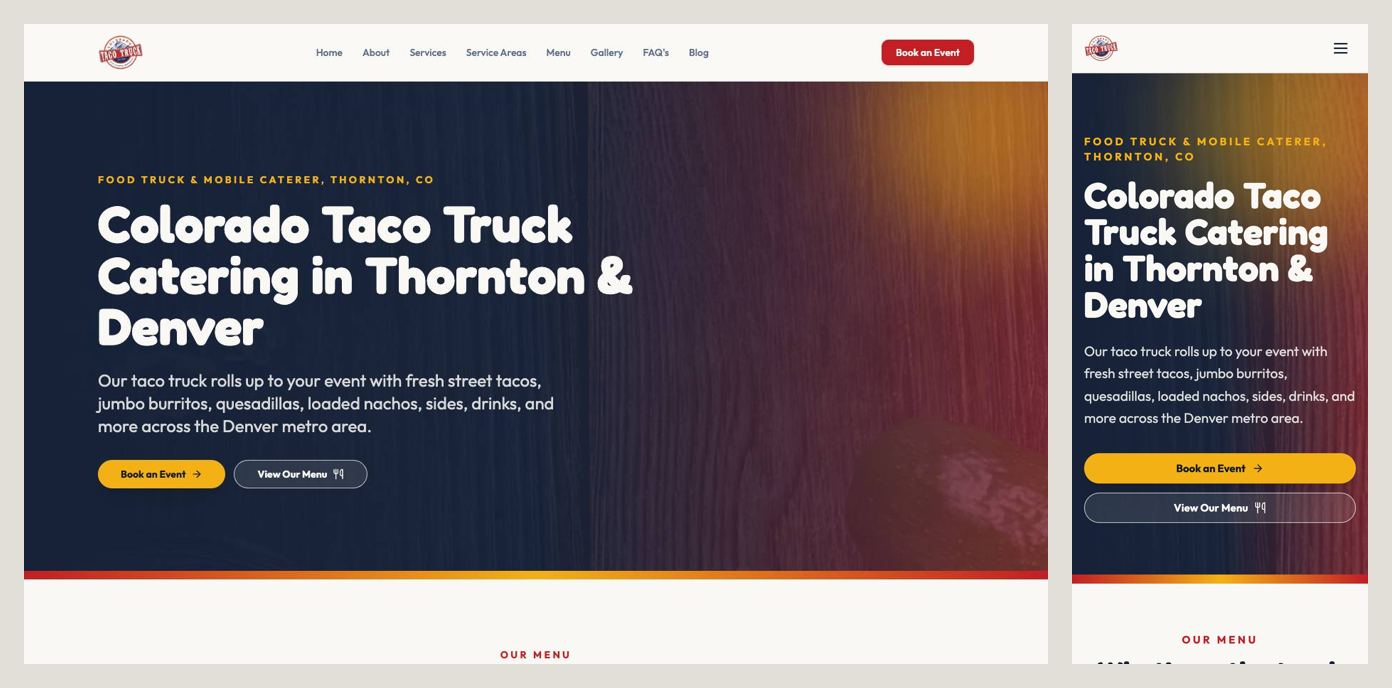
Everything on the first screen is about events. A small label says Food Truck & Mobile Caterer, Thornton, CO, the headline names the service and the area (Colorado Taco Truck Catering in Thornton & Denver), and one sentence covers the menu: street tacos, jumbo burritos, quesadillas, loaded nachos, sides and drinks. Then two buttons: Book an Event and View Our Menu. Further down, the booking section tells you exactly what to send: your date, location, guest count and menu ideas.
Steal this: tell people what information you need to quote. It makes the inquiry easy to send and gives you everything you need on the first reply.
2. Modern Tortilla — Phoenix, AZ
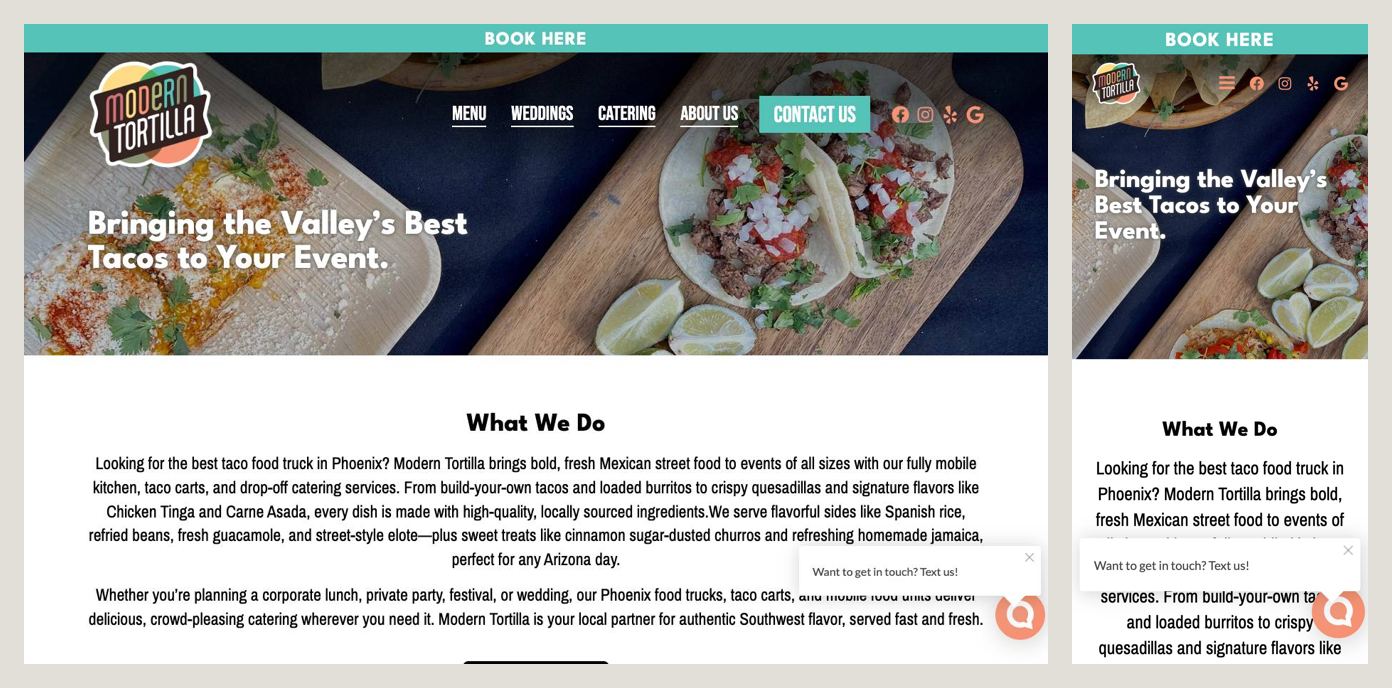
A bright Book Here bar sits across the very top of the page, above the logo. The headline is written for the event planner: Bringing the Valley’s Best Tacos to Your Event. Under it, three event types: weddings, private events, food truck festivals. The site then explains booking in three short steps (tell us about your event, review quotes, confirm), and a small “text us” box offers a faster way in.
Steal this: put the booking button above everything else, logo included. For a catering business, it’s the one thing every visitor might need.
3. Sweet Magnolia Smokehouse — Phoenix, AZ
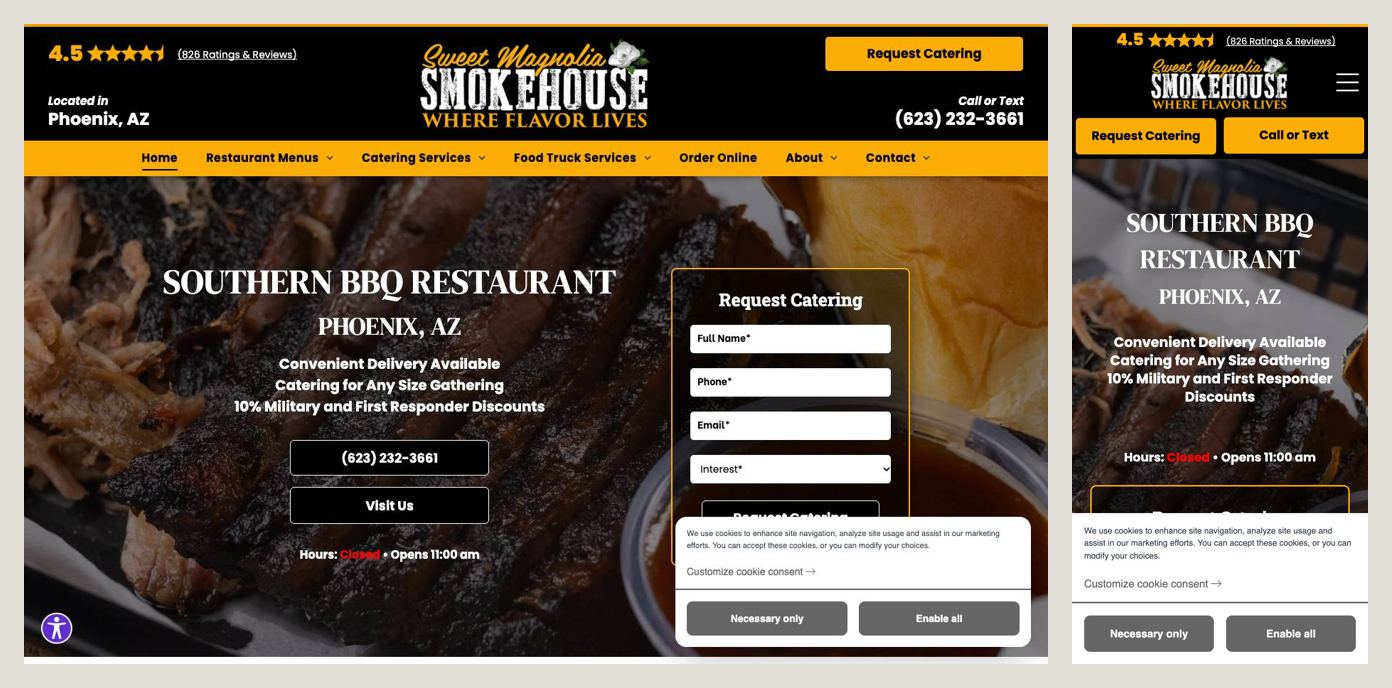
Sweet Magnolia runs a barbecue restaurant and food trucks, and the site serves both crowds without mixing them up. The very top line shows 4.5 stars from 826 ratings and reviews. Right under the logo, two big yellow buttons: Request Catering and Call or Text. The first screen also shows today’s hours, whether they’re open right now, and a 10% discount for military and first responders. Further down, the menu lists the truck’s event types one by one: concerts, corporate events, private parties, school events, weddings.
Steal this: if you have a big review count, put it at the very top. For a caterer, hundreds of reviews answer the “will the food be good?” question before it’s asked.
4. Carolina Crust — Raleigh-Durham, NC
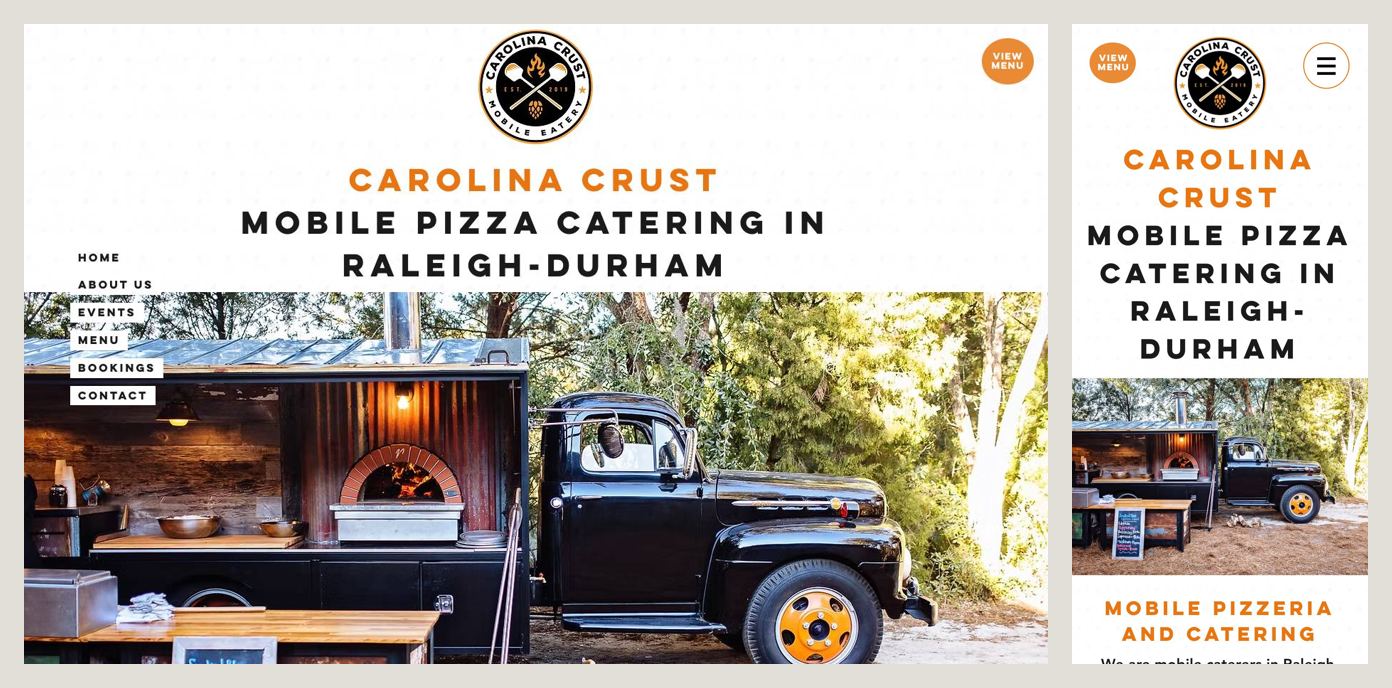
The headline is plain and complete (Carolina Crust, Mobile Pizza Catering in Raleigh-Durham), and the first photo is the truck itself: an old black pickup with a pizza oven built onto the back. For a wedding or a party, that truck is the product, and the photo sells it better than any copy could. Further down, the site adds two details people remember: the business was founded by a father and son, and the truck has four beer taps.
Steal this: if your truck looks good, make it the main photo. Event planners are booking the experience as much as the food.
5. Wildfire Cuisine — Denver, CO
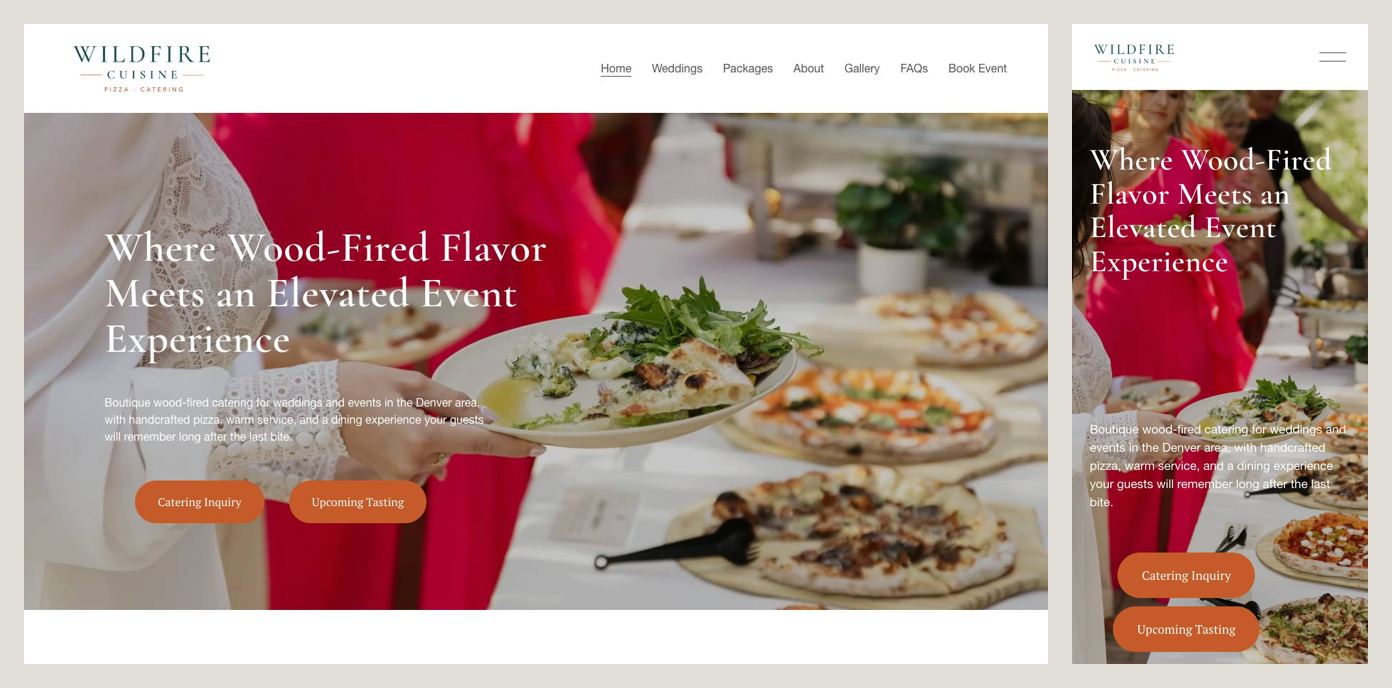
Wildfire sells wood-fired catering mostly to couples planning weddings, and the site is designed for them: an elegant serif headline, a photo of guests at an event, and Boutique wood-fired catering for weddings and events in the Denver area. The clever part is the second button. Next to Catering Inquiry there’s Upcoming Tasting, which leads to a list of public tastings and pop-ups (when we looked, one at a Denver brewhouse) where couples can try the food before they commit.
Steal this: give people a low-stakes way to try you. For a wedding caterer, “come taste it at the brewery on Thursday” is a much easier yes than “send us your budget”.
What they all have in common
- A booking button on the first screen, sometimes above the logo.
- What they serve, in one line, with the menu one tap away.
- The area they cover, by name.
- The event types listed out, so a planner can see their event is covered.
- Something memorable: the truck itself, a family story, a tasting, a review count.
The mistakes that cost bookings
These kept coming up on the truck sites that didn’t make the list:
- Pop-ups on top of pop-ups. A job ad, a loyalty program and a cookie banner, all before the visitor sees what you serve.
- A logo and social icons, and nothing else. No menu, no area, no button.
- “Click here for more information” instead of a booking form.
- A schedule page that’s out of date. If you post where you’ll be, keep it current, or just link to the Instagram you actually update.
- No guest-count or date fields on the inquiry form, which means an extra round of emails before you can even quote.
A checklist for your food truck website
First screen, on your own phone:
- What you serve, in one line
- Your city and how far you’ll travel
- A Book or Request Catering button
- A phone number or text option
- A photo of your truck or your food, not stock
Further down the page:
- Your menu, or your catering packages
- Event types you do: weddings, corporate, private, festivals
- An inquiry form asking for date, location and guest count
- Minimums or per-guest pricing, if you can share them
- Where to find you this week, or a link to the social account you keep current
- Reviews from people who booked you for events
Build it yourself, or have it built
You can build all of this yourself with a site builder: pick a template, add your menu and photos, and work through the checklist above. Plan on a few evenings and a monthly subscription. If you’d rather spend those evenings on the truck, that’s what we do: a custom one-page site with your photos, your menu and the copy written for you, live in five business days for a flat $1,000, with no monthly fees.
Either way, start with the first screen. That’s where the event booking is won or lost.